We earn a commission if you buy through our links, at no extra cost to you.
Best Camping Tents for Families With Kids (2026)
How to size a family camping tent: rated vs comfortable capacity, standing height, doors, setup speed and carry weight, plus four car camping tents worth a look.
At a glance
For a family, pick a tent rated well above your headcount and tall enough to stand in. The NEMO Aurora Highrise 6P is a freestanding 77-inch cabin, the Kodiak Canvas Flex-Bow Deluxe 10x10 suits longer stays, and the CORE 9 Person Instant Cabin Tent gives the most floor at the entry-level end.
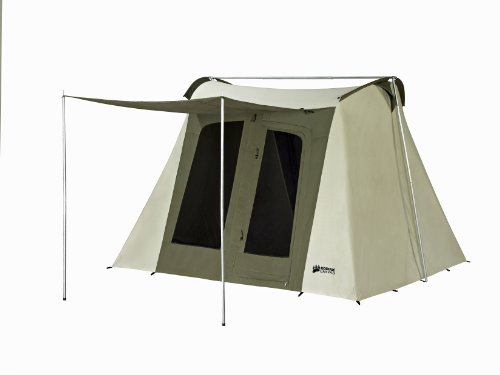

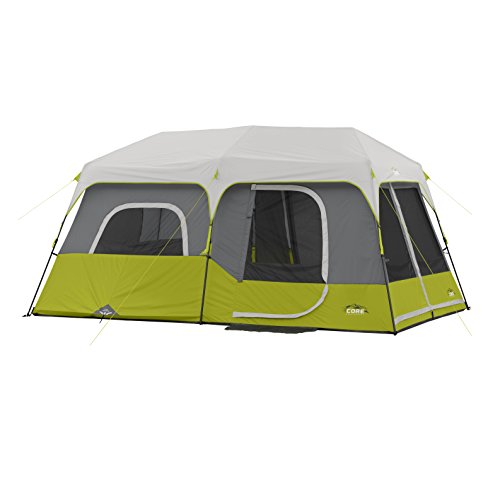
Shopping for a family camping tent starts with a trap. A tent labeled “6-person” sounds like it fits six people, and it does, in the same way a parking space fits a car: with nothing left over. Once you add a couple of kids, a cooler, duffel bags, a camp chair that came in out of the rain and a dog, the label stops meaning much. This guide explains how to read the numbers, then covers four car camping tents from our lineup that suit different families.
A word on method. Everything below comes from the makers’ own product pages, plus Kodiak’s owner’s manual, and the analysis is our own reading of those documents. Where a maker gives no figure, we give none. Every page we drew on is listed under Sources at the end.
How to Size a Family Tent
Start with rated capacity, then subtract. Makers calculate capacity by fitting sleeping bags side by side. A usable rule is to take the rated number and drop two to three people from it if you want cots or air beds, or if your kids are old enough to want their own corner. CORE does the arithmetic for you: its 14 x 9 ft cabin is rated for nine, but CORE says four plus gear is the most comfortable arrangement and that two queen air beds fit inside.
Run the floor-area math yourself. Dividing floor area by rated capacity gives a rough per-person figure: the Kodiak’s 10 x 10 ft footprint is 100 sq ft for six, which is about 17 sq ft each; the NEMO’s 83.3 sq ft floor for six is about 14 sq ft each; the CORE’s 126 sq ft for nine is also about 14 sq ft each; and the Gazelle’s 61 sq ft for four is about 15 sq ft each. Those are all tight at the rated number. Dividing by the number of people you actually bring tells you more.
Standing height matters more than you expect. A tent with steep walls lets an adult stand, change clothes and handle a toddler without kneeling. Peak height alone is misleading in a dome, so look for the words “cabin” or “steep walls.” All four tents below list a standing-height peak or center: 6 ft 6 in (Kodiak), 77 in (NEMO), 78 in (Gazelle) and 78 in (CORE), according to the makers.
Two doors help more than they sound. With two doors, a late-night bathroom run does not mean stepping over sleeping people. All four tents here have two doors.
Room dividers and vestibules. A divider gives parents and children their own space, which only one tent here (CORE) includes as a removable panel. Vestibules, as on the NEMO’s two 23.6 sq ft ones, give wet boots and strollers a place outside the sleeping area.
Setup and carry weight. You carry a family tent from the car to the site, not up a trail, but weight still matters when you set up alone with kids in the car. The tents below range from about 18 lb packed (NEMO) to 68 lb (Kodiak).
Pick a site, not just a tent. The National Park Service’s camping pages are a good starting point for planning a first family trip, and its backcountry page reminds campers to expect any weather, including lightning, wet or windy conditions. No tent changes that. If lightning is nearby, go to a building or hard-topped vehicle.
NEMO Aurora Highrise 6P: The Freestanding Family Cabin
A freestanding three-season cabin with a 77-inch peak, two doors and two large vestibules, for families who want standing room without staking out a heavy canvas tent.
According to NEMO, the Aurora Highrise 6P has a floor of 100 x 120 inches (83.3 sq ft), a 77-inch peak, two doors and two vestibules of 23.6 sq ft each. Its minimum weight is 15 lb 14 oz and its packed weight is 18 lb 10 oz. NEMO rates it three-season, with a 1200 mm polyurethane polyester fly and a 150D floor rated at 1500 mm.
Why it suits a family: it is freestanding, so you can set it up on a deck or a compacted pad and move it a few feet if you chose a bad spot. The large windows have built-in rain covers, which lets you vent the tent in drizzle. NEMO also lists Nightlight Pockets that diffuse headlamp light, which helps at bedtime with kids.
Where it falls short: NEMO calls it three-season, so it is a spring-to-fall tent. And at 83.3 sq ft, six really is the ceiling. For a family of four who like space, it is a comfortable fit. Read our NEMO Aurora Highrise 6P profile for the full spec rundown.
Kodiak Canvas Flex-Bow Deluxe 10x10: The Base Camp
A cotton canvas base camp with a 6 ft 6 in ceiling, two doors and four windows, for families who camp in one spot for days and drive right up to it.
Kodiak lists the Flex-Bow Deluxe 10x10 (model 6010) as a 6-person tent with Hydra-Shield cotton duck canvas, a 16 oz vinyl floor, two doors, four windows, two vents and an awning. The pack weight is 68 lb including 6.5 lb of stakes, so this tent lives in a truck bed or an SUV cargo area and stays where you put it. Kodiak backs it with a lifetime limited warranty.
Canvas suits families who camp in the same campground every summer: it is breathable, which Kodiak says helps with condensation, and the steel frame is built for long stays. The costs are real, though. Kodiak’s manual says the tent is not freestanding and will collapse if it is not staked, and it recommends setting it up at home once and letting it dry fully so the canvas can season. It also says a damp tent packed away can grow mold and void the warranty, so plan to dry it before you leave on Sunday.
One rule from Kodiak’s manual belongs in every family’s plan. The tent is flammable, and the manual says never to use, light or refuel a stove, lantern, heater or other heat source inside it, because of carbon monoxide poisoning and burns. Keep camp stoves and lanterns outside, and keep children away from them. See our Kodiak Flex-Bow Deluxe 10x10 profile for setup and care details.
Gazelle T4 Hub Tent: The Fastest Setup

A pop-up hub tent that Gazelle says sets up in 90 seconds, with two doors and a 78-inch center height, for couples or small families who arrive late or move often.
Gazelle describes the T4 as a 4-person pop-up with a 94 x 94 inch footprint (61 sq ft), a 78-inch center height and a weight of 30 lb. The shell is 210D Oxford polyester rated at 2000 mm, the floor is 300D Oxford rated at 5000 mm and removable for cleaning, and the tent has two D-shaped doors and six mesh windows. Stakes, guylines and a duffle come in the box.
The case for it is speed. If you pull into a campground at dusk with tired kids, a tent that opens like an umbrella is a gift. The case against it is size and cold: 61 sq ft is snug for four, and with that much mesh it is a summer and early-fall tent. Its pack length of 66.5 inches is also long, so measure your trunk. Our own comparison of floor areas is in the Gazelle T4 Hub Tent profile.
CORE 9 Person Instant Cabin Tent: The Most Floor
A 14 x 9 ft instant cabin with a removable room divider and room for two queen air beds, for families who want the most floor space at the entry-level end of our lineup.
CORE’s official page lists a 14 x 9 ft floor, a 78-inch center height, two doors, 68D polyester at 1200 mm, a polyethylene floor and a weight of 37 lb. Poles are pre-attached and CORE says setup takes as little as 2 minutes with two people. It includes a removable room divider, an electrical port and a rainfly with attached guylines. CORE says the tent is designed to withstand winds up to 35 mph when properly staked and anchored.
This is the one to look at if your plan involves air beds and a divided interior. It is also the entry-level option here: CORE gives a 1-year warranty and does not publish a waterproof rating for the floor. Treat the nine-person rating as a ceiling, and think of it as a tent for four or five with gear. The CORE 9 Person Instant Cabin Tent profile goes through the pros and cons.
Which Tent for Which Family
- Family of four who camp a few weekends a year and want standing room: the NEMO Aurora Highrise 6P. It is the lightest of the cabin-style tents here and freestanding.
- Family that stays put for a week or more: the Kodiak Flex-Bow Deluxe 10x10, if you can accept staking and canvas care.
- Family that arrives late or breaks camp often: the Gazelle T4 Hub Tent, with the caveat that four people will feel it.
- Family that wants air beds and a divided interior: the CORE 9 Person Instant Cabin Tent.
If you are comparing tents for two adults with no kids, see our guide to the best 2-person camping tents. For fall and winter trips, see the guide to camping tents for cold weather.
A Few Habits That Matter More Than the Tent
Whatever you buy, use all the stake points and guylines. Pitch where water will drain away, keep the doors pointed away from the wind, and put a ground cloth or footprint under the floor. Keep cooking and heating gear outside and downwind. Dry the tent fully before you pack it. And pick the site for the weather, not just the view: dead branches over a tent are a bigger problem than the fabric rating. None of the makers promises how a tent will do in a particular storm, and neither do we.
To see how all eight tents we cover compare, read the best camping tents of 2026.
Sources
- Kodiak Canvas 10 x 10 ft. Flex-Bow Deluxe Canvas Camping Tent (official product page)
- Kodiak Canvas Flex-Bow Tent Owner’s Manual
- NEMO Aurora Highrise official product page
- Gazelle T4 Hub Tent official product page
- CORE 9 Person Instant Cabin Tent official product page
- National Park Service: Camping
- National Park Service: Backcountry Camping
Frequently asked questions
How big a tent does a family of four need?
Plan on a tent rated for six. Makers rate capacity by how many sleeping bags fit shoulder to shoulder, which leaves no room for gear. CORE says this directly: its 9 Person Instant Cabin Tent sleeps 9 by industry standard, but CORE calls 4 plus gear the most comfortable arrangement.
Is standing height worth paying for?
For most families, yes. Getting kids dressed, moving gear and waiting out rain are all easier when adults do not crouch. Kodiak lists a 6 ft 6 in ceiling, NEMO a 77-inch peak, Gazelle a 78-inch center height and CORE a 78-inch center height.
Do I need a freestanding tent?
Not always. A freestanding tent such as the NEMO Aurora Highrise 6P stands up on its own before staking, so it is easier to reposition. Kodiak's manual says its Flex-Bow tent is not freestanding and will collapse if it is not properly staked, so it needs ground that holds stakes.
Can I run a heater or stove in a family tent?
No. Kodiak's owner's manual says never to use, light or refuel a stove, lantern, heater or other heat source inside the tent, citing carbon monoxide poisoning and burns. Treat that as a rule for any fabric tent.
What is the easiest family tent to set up?
The two fastest by the makers' own claims are the Gazelle T4 Hub Tent (90 seconds or less) and the CORE 9 Person Instant Cabin Tent (as little as 2 minutes, with two people). Both are heavier and less refined than a pole-and-clip tent, so weigh speed against the rest of the spec sheet.
Are these tents for toddlers to play in?
No. These are sleeping tents for the family, and none of the makers describes them as play tents. We do not make any claim about child safety, so supervise children around stakes, guylines, zippers and anything hot.