We earn a commission if you buy through our links, at no extra cost to you.
Best Camping Tents for Cold Weather (2026)
Three-season, four-season and canvas all-season tents explained, with what the makers claim about snow and cold, condensation, anchoring and heat rules.
At a glance
For snow trips, the MSR Access 2 is a four-season tent built for winter backcountry travel. The Kodiak Canvas Flex-Bow Deluxe 10x10 is an all-season canvas car camping tent, not a heavy-snow shelter. The NEMO Dagger OSMO 2P is a three-season option for cool shoulder-season nights.

“All-season,” “four-season,” “three-season” and “all-weather” are marketing words, not standards. Each maker draws the lines in a different place, and a tent sold for “all weather” may be happier in October rain than in a January storm. This guide sorts out what the makers actually claim, what the claims leave out and which tents in our lineup suit cold-weather camping.
This guide draws only on the makers’ own product pages, Kodiak’s owner’s manual and the National Weather Service. Where a maker states no snow-load figure or temperature rating, we do not invent one. No tent makes cold camping safe on its own; your sleeping system, your plan and the forecast matter more.
Three-Season, Four-Season and Canvas All-Season
Three-season tents are built for spring, summer and fall. They tend to use lots of mesh for airflow, light fabrics and poles sized for rain and moderate wind. NEMO and Big Agnes label the tents below as three-season. In cool shoulder-season weather, they trade warmth for weight.
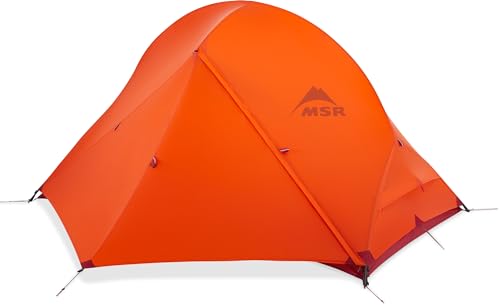
Four-season tents are built for snow and wind. MSR says its Access 2 is “lighter than a mountaineering tent, but warmer than our backpacking tents,” with limited mesh on the body to hold warmth, a central-support frame that resists snow loading and Easton Syclone composite poles that resist breaking in winter conditions. Four-season designs are usually stuffy in summer and heavier than three-season ones.
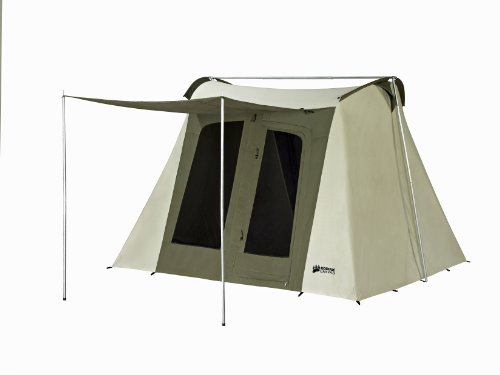
Canvas all-season tents are a different idea: heavy, breathable cotton on a steel frame, intended to stay up for days. Kodiak calls its Flex-Bow tents all-season, meaning usable year-round, but says they are not designed for extreme winter mountaineering or heavy snow accumulations. The manual says the same thing and adds that winter camping can be enjoyable in the tent if you clear snow from it as needed during heavy storms.
MSR Access 2: The Winter Backcountry Tent
A four-season two-person tent for ski touring, splitboarding and snowshoe trips, with limited mesh for warmth, rainfly vents and a snow-load-resistant frame, according to MSR.
MSR lists the Access 2 at a minimum weight of 3 lb 10 oz (packaged 4 lb 1 oz), with an 84 x 50 inch floor (29 sq ft), a 42-inch interior peak, two doors and a 17.5 sq ft vestibule. The floor is 30D ripstop nylon rated at 3000 mm, the rainfly is 20D ripstop at 1200 mm, and the box includes eight Groundhog stakes. MSR notes a compatible footprint is sold separately.
Two things stand out for winter. The floor rating is higher than most of the other tents in our lineup, which suits snow and slush. And the rainfly has vents to reduce condensation, which matters because you breathe a lot of moisture into a small tent on a cold night. MSR does not publish a snow-load figure or a temperature rating, so neither do we. See the MSR Access 2 profile for the full spec rundown. It is a two-person tent for people with winter experience, not a family tent.
Kodiak Canvas Flex-Bow Deluxe 10x10: Canvas for Cold-Season Car Camping
An all-season cotton canvas tent with a steel frame and a 6 ft 6 in ceiling, for car campers who want a roomy base camp in fall and mild winter conditions, not heavy snow.
Kodiak lists the Flex-Bow Deluxe 10x10 as a 6-person, 10 x 10 ft tent with 10 oz cotton duck canvas on the ceiling, 8.5 oz on the walls and a 16 oz vinyl floor. Its pack weight is 68 lb including stakes. It has two doors, four windows and two vents. This is a drive-in tent; it is not a ski-touring tent.
Kodiak’s manual has four cold-weather points. First, anchoring: the tent is not freestanding and must be staked, and in soft sand or snow the manual suggests a dead-man anchor, meaning a horizontal piece of wood buried roughly 12 to 18 inches deep with a guyline to the stake loop. Second, snow: clear it off during heavy storms. Third, condensation: it depends on the temperature difference and humidity and can be reduced by venting the tent, and a ground cloth can reduce condensation between the floor and a sleeping mat. Fourth, heat.
That fourth point is the rule that matters most. The manual says the tent is flammable and that you must keep all flame and heat sources away from the fabric. It says never to use, light or refuel a stove, lantern, heater or other heat source inside the tent, and warns of carbon monoxide poisoning and burns. It also says to keep adequate ventilation in the tent at all times. Canvas tents are popular with cold-weather campers who are tempted to heat them, so we are repeating the rule here. Warmth should come from sleeping bags, pads and clothing, not from an appliance in the tent. Kodiak backs the tent with a lifetime limited warranty; see our Kodiak Flex-Bow Deluxe 10x10 profile for more, including the canvas seasoning and drying steps the manual calls for.
Big Agnes Copper Spur UL2 mtnGLO and NEMO Dagger OSMO 2P: Shoulder-Season Only
Two lightweight tents from our lineup are three-season and are not winter tents. Their makers label them that way. They are worth considering if your cold-weather camping means a cool October night, not snow. Each has its own box below.
NEMO Dagger OSMO 2P
A three-season freestanding backpacking tent with a 43-inch peak and two vestibules, for two hikers on cool shoulder-season trips, not winter.
NEMO lists the Dagger OSMO 2P at a minimum weight of 3 lb 5 oz, with an 88 x 50 inch floor, two doors and two 12.1 sq ft vestibules. The fly is rated at 1500 mm and the floor at 2000 mm, and NEMO says the OSMO fabric stretches 3x less when wet, which means less fly sag in damp, cold weather. See the NEMO Dagger OSMO 2P profile.
Big Agnes Copper Spur UL2 mtnGLO

A three-season freestanding ultralight tent with built-in LED lights, for two hikers who want a light shelter on cool shoulder-season trips, not winter.
Big Agnes lists a trail weight of 2 lb 12 oz, a 29 sq ft floor, a 40-inch head height and two 9 sq ft vestibules. The tent body uses 15D polyester mesh, and the page does not give a temperature rating. The built-in lights help in long fall nights, when the sun sets early, and they run on 3 AAA batteries, which Big Agnes says to remove when not in use. See the Copper Spur UL2 mtnGLO profile. Cold weather drains batteries faster, so carry spares.
Reading the Cold: Wind Chill
Whatever tent you choose, the weather is a bigger factor than the fabric. The National Weather Service explains wind chill as how cold people feel outside, and gives an example: at 0°F with a 15 mph wind, the wind chill is -19°F, and exposed skin can freeze in 30 minutes. A tent blocks wind, but you leave it for water, a bathroom stop or a gear check, and you can lose heat in the vestibule. Check the forecast, not just the temperature, and pitch where terrain breaks the wind.
Practical Cold-Weather Habits
- Anchor properly. Use every stake point and guyline. On snow, Kodiak’s manual suggests a dead-man anchor, and MSR includes eight Groundhog stakes with the Access 2.
- Ventilate even when it feels wrong. Cracking a vent or door reduces condensation, according to Kodiak and MSR. Venting also helps keep fresh air moving.
- Keep flames and heaters outside. Per Kodiak’s manual: no stove, lantern or heater inside the tent.
- Keep wet gear in the vestibule, not on the sleeping pad.
- Dry the tent before storage. Kodiak says packing a damp canvas tent can cause mold and void the warranty, and Big Agnes says mildew can damage a nylon tent.
- Go smaller or wait. If the forecast shows heavy snow or high wind, a tent its maker does not rate for those conditions is the wrong tent for that trip. No maker promises how a tent will handle a specific storm.
If you are choosing between tents for two adults, our guide to the best 2-person camping tents compares the three-season options head to head. For family car camping in cooler weather, see the guide to family camping tents.
The full ranking of all eight tents we cover is in the best camping tents of 2026.
Sources
- MSR Access 2 official product page
- Kodiak Canvas 10 x 10 ft. Flex-Bow Deluxe Canvas Camping Tent (official product page)
- Kodiak Canvas Flex-Bow Tent Owner’s Manual
- NEMO Dagger OSMO official product page
- Big Agnes Copper Spur UL2 mtnGLO official product page
- National Weather Service: Wind Chill Chart
Frequently asked questions
Can I use a three-season tent in winter?
Makers rate three-season tents for spring, summer and fall. NEMO lists the Dagger OSMO 2P as three-season and Big Agnes lists the Copper Spur UL2 mtnGLO as three-season. They can work for a cool shoulder-season night, but neither maker presents them as snow tents.
What is the difference between a three-season and a four-season tent?
Makers use four-season for tents built for snow and wind. MSR says its Access 2 has limited mesh for warmth, a frame that resists snow loading and Easton Syclone poles that resist breaking in winter conditions. The cost is a tent that is stuffier and less comfortable in summer.
Is a canvas tent good in winter?
Kodiak calls its Flex-Bow canvas tents all-season, but says they are not designed for extreme winter mountaineering or heavy snow accumulations. Its manual says to clear snow off the tent during heavy storms and to use a dead-man anchor in soft sand or snow.
Can I use a heater or stove inside my tent to stay warm?
No. Kodiak's owner's manual says the tent is flammable and that you should never use, light or refuel a stove, lantern, heater or other heat source inside it, because of carbon monoxide poisoning and burns. It also says to keep adequate ventilation at all times.
How do I reduce condensation in cold weather?
Kodiak's manual says condensation depends on the difference between inside and outside temperature and on humidity, and that venting the tent reduces it. MSR lists rainfly vents on the Access 2 for the same reason.
How cold is too cold to camp?
A tent rating does not answer that. The National Weather Service says that at 0°F with a 15 mph wind, the wind chill is -19°F and exposed skin can freeze in 30 minutes. Check the wind chill forecast and plan for the conditions, not the tent.